Wilimee vineyard is situated at the end of a Valley in the Macedon Ranges and bordered by the Mitchell Shire to the east and on the Great Dividing Range . Named after the sacred stone axe quarry Wilimee Mooring, where greenstone blanks were traded for possum skin rugs, Wilimee remains focused on the land from which the vines grow. This guiding principle know as terroir where environmental factors of soil, landscape and climate reign supreme in every decision we make.
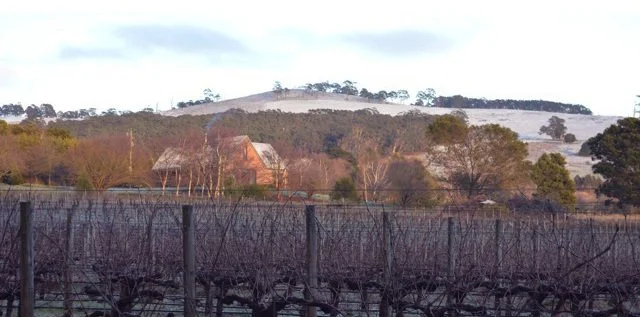
Looking up toward Mount William from the Pinot Block
Wilimee vineyard employs both bio-dynamic and organic methods to build its organic matter and soil health.
There are no synethic chemicals used instead we utilise compost teas, kelp, fish and molasses to activate soil fungi , a mineral rich basalt dust, a organic superfood - Crop Biolife and biodynamic preparations to increase vine health and resilience.
Soil aeration is also important to create better water penetration. More oxygen in the soil encourages bacteria and fungi which in turn sequesters carbon. Organic matter is also used to increase water holding capacity and micro-organisms. Each percentage of organic matter per hectare will reduce water run off and aid water retention. To increase organic matter a cover crop is sown each autumn - we often use a mix of: berseem clover, veitch, radish, turnip, linseed, phacelia, beans, sunflower, black mustard, yellow mustard, buckwheat, crimson clover and peas.
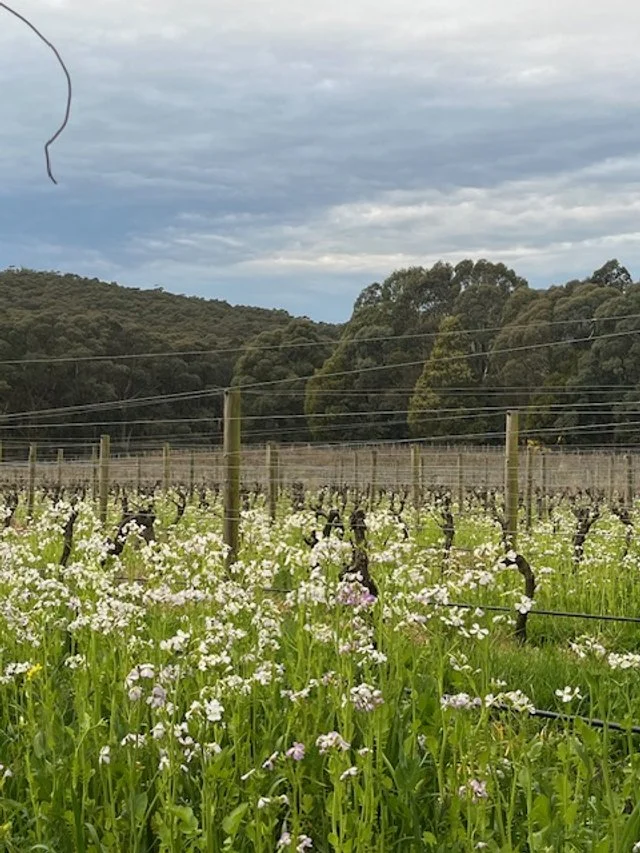
In early spring the cover crop.
Interestingly every increase of organic matter allows for better water holding capacity (every % increase of organic matter per ha increases the soil water holding capacity by 150,000-170,000 litres.) which in dryer years is crucial in a dry grown vineyard such as Wilimee.
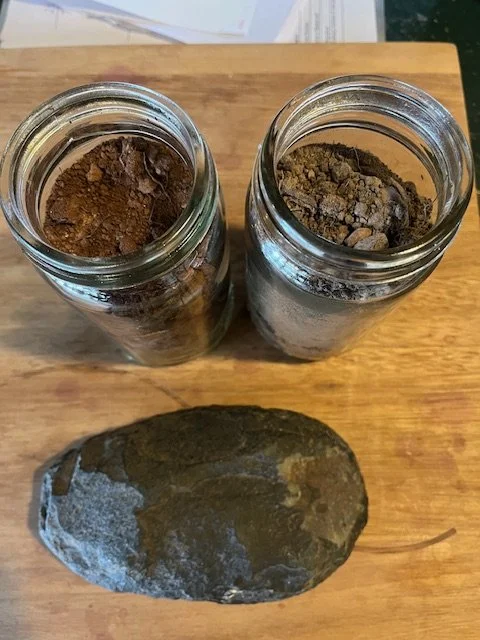
Cambrian soil where the chardonnay grows on and Granite soil where the Pinot Noir predominately grows on. A piece of greenstone.
Its soil and its health is the main focus in the vineyard with both Granite Soil and Cambrian and recent adventures has had us create a Pinot Noir on both soil types and to the future we will do the same with the Chardonnay. This inspiration came from time spent at Chateau de La Fleur where they divided up their harvest based on soil type, known as terroir.
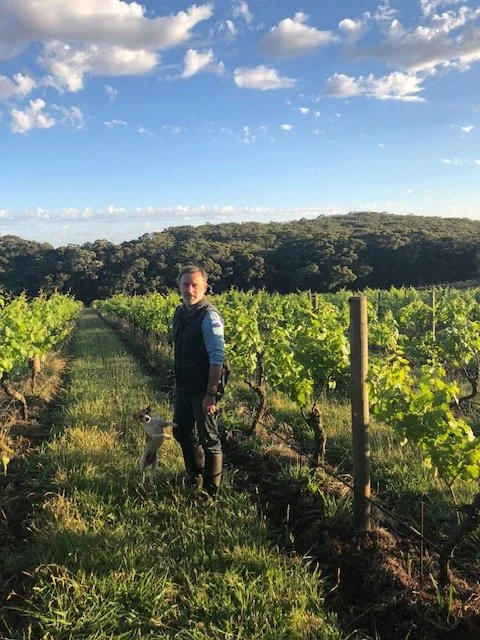
Spring in the Pinot Noir
Of course we are forever learning new ways and improving on others. We have engaged a viticultural consultant - Tim Brown who helps with the general vine health and from which we converted to the Poussard Pruning method. We have also created a Biolink in conjuction with Landcare where we planted over 800 plants and trees to enhance the biodiversity of our property. We are constantly doing leaf analysis and soil tests to see what we need to help achieve healthy soils and vines.
Unusally too the vineyard is dry grown. As we don’t irrigate, each soils (cambrian and granite) water holding capacity and the vigour of the vines differ greatly. As a result, our pinot noir is more concetrated, due to small berries and bunches. Fruit tannis are fine and prevalent, colour is always dark and brooding. Again this is a process of terroir where the season and its rainfall determine the type of wine that develops.